
Donald Trump has just announced a 90-day postponement on tariff enforcement for most countries, with one major exception: China—which was hit with a record-breaking 125% tariff on April 9, 2025.
After several days of taking a tough public stance and vowing to impose sweeping tariffs to bring manufacturing back to the U.S., this sudden policy shift has come as a surprise to many observers.
.webp)
U.S. government bonds have long been considered the safest asset class in the world—a cornerstone of global financial trust.
But just hours after China retaliated with its own tariffs and dumped a significant amount of U.S. Treasuries, the market felt the shock.
While stock market volatility is something Trump has historically brushed off, the bond market is a different story.
The 10-year U.S. Treasury yield (10Y) surged past 4.5%—a dangerously high level given current global economic conditions.

In the financial world, one of the most common strategies used by hedge funds is known as the Basis Trade.
Here’s a simplified explanation:
Investment funds borrow money to buy real U.S. government bonds, then sell futures contracts—which are derivatives based on those same bonds.
The goal is to profit from the price difference between the bond and its future.
Because the price gap is very small, funds use extremely high leverage—borrowing up to 20 times their actual capital.
When U.S. bond prices dropped rapidly (partly due to China’s large-scale bond sell-off), this model racked up massive losses within hours.
As a result:
Funds were hit with margin calls
They were forced to sell off more bonds, causing prices to fall even further
This drove yields even higher, triggering a self-reinforcing sell-off
A domino effect began to unfold.
The U.S. government would face higher borrowing costs
American businesses would struggle to get loans, and production/investment costs would surge
The stock market would decline, as investor risk aversion grows
The risk of a technical financial crisis becomes very real
Without swift intervention, Trump’s "global tariff campaign" could ultimately backfire on the U.S. economy itself.
One of the key reasons behind President Trump’s sudden tariff pause is the strong reaction from financial markets—especially the bond market.
The U.S. needs to keep capital flowing, and create breathing room for itself and global partners to assess and adapt policies.
In an interview with Fox News, President Trump stated:
“Well, I thought that people were jumping a little bit out of line” he told reporters at the White House.“They were getting yippy, you know, they were getting a little bit yippy, a little bit afraid, unlike these champions, because we have a big job to do.”
“No other president would have done what I did. No other president,” he said. “And it had to be done.”
He later added: “You have to have flexibility” in policies.
Watch the full video here:
Senator Chuck Schumer (Democrat) commented on the situation, saying:
“A 90-day pause means they don't know what's gonna happen at the end of the 90 days. A 10% is still going to hurt our families. These tariffs and this trade war are absurd. They're going to increase costs for everyday goods, from food to housing to anything you buy for your family or your children. It's going to fuel inflation.”
Compiled, analyzed, and shared by: Minh Truong
Welcome to 3C – Cross Connect Club
At 3C, we bring together professionals across industries who share a vision, passion, and commitment to growth.
This is more than a networking space—it’s a rich knowledge hub, filled with the latest news, deep insights, and valuable business opportunities.
Whether you're in logistics, real estate, tech, manufacturing, or investment, 3C is where industry professionals connect, collaborate, and shape the industries.
Unlock opportunities! Join our the events to boost your business, connect with industrial stakeholders, and stay ahead in competitive industries.
See DetailsExperience Vietnam's leading industrial ecosystems - up close! Join our network to elevate your brand image and visibility. Connect with industry experts, showcase your expertise, and gain the spotlight you deserve. Click to learn more and boost your brand today.
See DetailsDeep-dive engagement with a highly filtered audience. Connect with potential overseas partners, and drive growth. Click to explore how we can help you expand your reach and generate leads.
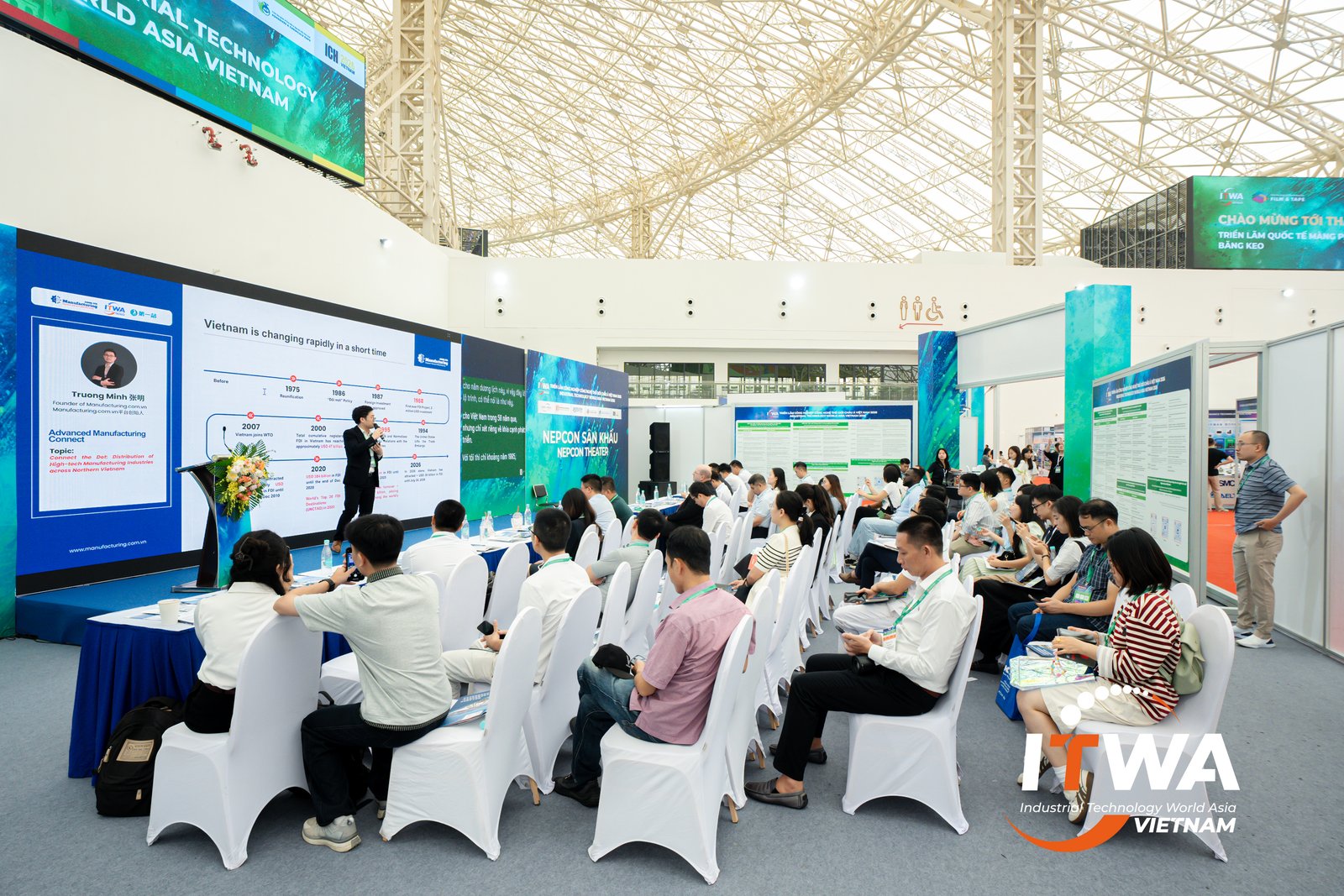
See DetailsA morning of sharp insights and real connections at NEPCON Theater, VEC Hanoi. Industrial zone developers, investment specialists, and technology leaders shared on-the-ground perspectives on Northern Vietnam's high-tech manufacturing landscape.
Monday, 10 Aug, 2026
EuroCham’s Q1 2026 Business Confidence Index shows Vietnam remains a strategic investment destination for European companies. The index fell to 72.7, but 93% of respondents still recommend Vietnam, supported by resilient revenue performance, domestic market strength, and continued long-term growth confidence.
Thursday, 16 Apr, 2026
March 2026 brought a wide range of important tax-related updates across tax administration, corporate income tax, personal income tax, value-added tax, fees and charges, e-invoicing, household business taxation, import-export tax, customs procedures, special consumption tax, environmental protection tax, and accounting.
Monday, 06 Apr, 2026
Last Friday evening, we welcomed a full-capacity room of professionals from across Vietnam’s industrial and manufacturing ecosystem.
Saturday, 21 Mar, 2026
Green buildings are entering a new phase. International standards are shifting away from a narrow focus on energy savings and moving toward a bigger question: How much carbon a building creates across its entire life?.
Monday, 16 Mar, 2026
Organized by Cross Connect Club, in collaboration with the Vietnam Industrial Zone Community, and supported by leading international business associations, the Vietnam Industrial Tour | TECHFEST + Nam Dinh Vu IP has successfully wrapped up—leaving behind lasting connections, industry insights, and strong momentum for future collaboration.
Saturday, 11 Oct, 2025