

Green buildings are entering a new phase. International standards are shifting away from a narrow focus on energy savings and moving toward a bigger question: How much carbon a building creates across its entire life?.
This shift is especially relevant for investors, industrial park developers, and manufacturers operating in export-facing supply chains, where sustainability expectations increasingly influence business decisions.
The global construction sector is under pressure to cut emissions. Research often cited in industry discussions shows that building construction and operations account for about 37% of global CO₂ emissions. That reality is pushing green building standards to measure impact more broadly than before.
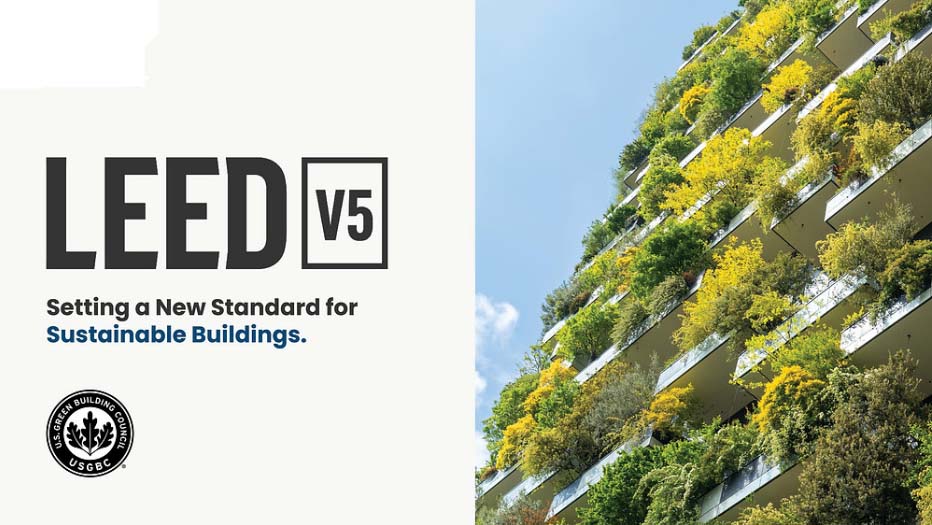
LEED, developed by the U.S. Green Building Council (USGBC), has introduced a new direction in its latest version, LEED v5.
In earlier versions such as LEED v4, life-cycle considerations were already present. LEED v5 makes the focus far more explicit: reducing carbon emissions across the full life cycle of a building, including:
Emissions from producing construction materials
Emissions during construction
Emissions during operation
Emissions linked to maintenance over the building’s lifetime
In practical terms, green building is becoming less about “operating efficiency” alone and more about managing environmental impact from start to finish.
One of the most important changes is that responsibility expands into the building materials supply chain. This is not an abstract concept. It is being shaped by three real-world forces:
Export market expectations
Environmental requirements in key markets such as Europe and North America are increasingly becoming part of business cooperation conditions. For industrial real estate and manufacturing, this can influence tenant requirements, supplier selection, and project positioning.
Government pressure on emissions reporting
As more countries move toward greenhouse-gas inventories and reduction pathways, businesses are expected to measure and disclose more environmental data tied to production and operations.
Competition for international tenants and capital
In industrial real estate, certified green buildings can make it easier to attract international tenants and investors who apply sustainability filters to site and facility decisions.
Even with a clear direction, execution still faces constraints.
Mismatch between international standards and local technical rules
Some natural or new materials can reduce carbon impact, yet they may struggle to meet certain domestic technical requirements, such as fire safety regulations.
Higher upfront cost perceptions
Green buildings can require higher initial investment compared with conventional projects. Industry experts note that cost gaps often stay manageable when green strategies are built into the project from the design stage. Over time, lower operating costs can help offset the difference.
LEED v5 is set to become mandatory after 30 June 2026. For developers planning new projects or manufacturers negotiating facilities, that deadline matters. It affects design decisions, material selection, and documentation requirements earlier than many teams expect.
LEED is one of the most widely used green building certification systems globally. It evaluates projects across areas such as:
Energy performance
Water use
Sustainable materials
Indoor environmental quality
Certification levels include:
Certified
Silver
Gold
Platinum
In Vietnam, LEED is most commonly applied to factories, logistics warehouses, office buildings, and selected commercial real estate projects.
For industrial developers and export-linked manufacturers, LEED v5 signals a straightforward shift in expectations.
Success will depend less on isolated upgrades and more on an integrated approach that connects design, materials, construction, and operations into one measurable, low-carbon plan.
Projects that adapt early will find it easier to align with international tenant standards, supply-chain screening requirements, and investor sustainability criteria as the market moves closer to the 30 June 2026 threshold.
Mở ra cơ hội! Chuỗi sự kiện networking chiến lược trong ngành công nghiệp Việt Nam, kết nối với các đối tác hàng đầu.
Chi tiết dịch vụTrải nghiệm và cảm nhận trực tiếp các Hệ sinh thái KCN hàng đầu Việt Nam.
Chi tiết dịch vụTiếp xúc và giao lưu với Các Doanh nghiệp nước ngoài hàng đầu có nhu cầu thực tế và có tính chọn lọc cao trong các chương trình Exclusive Site Tour và Business Networking Dinner
Chi tiết dịch vụAdvanced Manufacturing Connect 2026 chính thức diễn ra vào ngày 7/8 tại NEPCON Theater, trong khuôn khổ Industrial Technology Asia Vietnam 2026, quy tụ các chuyên gia và đại diện đến từ nhiều lĩnh vực trong hệ sinh thái công nghiệp và sản xuất tại Việt Nam.
thứ ba, 11 Th08, 2026
Báo cáo từ EuroCham quý I/2026 cho thấy Việt Nam vẫn là điểm đến đầu tư chiến lược của doanh nghiệp châu Âu. Dù chỉ số giảm còn 72,7 điểm, 93% doanh nghiệp vẫn khuyến nghị Việt Nam nhờ kết quả doanh thu bền bỉ, thị trường nội địa ổn định và triển vọng dài hạn tích cực.
thứ năm, 16 Th04, 2026
Tháng 03/2026 ghi nhận nhiều cập nhật quan trọng liên quan đến quản lý thuế, thuế thu nhập doanh nghiệp, thuế thu nhập cá nhân, thuế giá trị gia tăng, phí lệ phí, hóa đơn điện tử, hộ kinh doanh, thuế xuất nhập khẩu, thủ tục hải quan, thuế tiêu thụ đặc biệt, thuế bảo vệ môi trường và kế toán. Các thay đổi lần này không chỉ ảnh hưởng đến việc kê khai thuế mà còn tác động trực tiếp đến cách doanh nghiệp chuẩn bị hồ sơ, xử lý chứng từ, quản lý thanh toán, xây dựng chính sách lương, kiểm soát VAT đầu vào, vận hành giao dịch nội bộ và kết nối dữ liệu kế toán với hóa đơn điện tử.
thứ hai, 06 Th04, 2026
Công trình xanh đang bước sang một giai đoạn mới. Thay vì chỉ nói về tiết kiệm năng lượng hay vận hành hiệu quả, tiêu chuẩn quốc tế đang dịch chuyển sang câu hỏi lớn hơn: một công trình tạo ra bao nhiêu phát thải carbon trong suốt vòng đời của nó.
thứ hai, 16 Th03, 2026
Nhằm phục vụ cho chuỗi hoạt động diễu binh, diễu hành kỷ niệm 80 năm Cách mạng Tháng Tám và Quốc khánh 2/9 (A80), Công an TP. Hà Nội vừa thông báo kế hoạch điều chỉnh phân luồng giao thông và thời gian cấm đường trên diện rộng.
thứ tư, 20 Th08, 2025
Ngày 29/7/2025, Smart Factory Connect | Bắc Ninh 2025 đã quy tụ một cộng đồng sôi động gồm các nhà sản xuất, hiệp hội doanh nghiệp nước ngoài và các chuyên gia hàng đầu trong lĩnh vực số hóa, tự động hóa và năng lượng xanh.
thứ năm, 31 Th07, 2025


![[TỔNG KẾT] DIỄN ĐÀN ADVANCED MANUFACTURING CONNECT 2026](/uploads/0d53e1a6e293184aa848d1a6974f0e42/KO/2_1600_3000_gif.jpg)

![[Tổng Kết]: Sự kiện Smart Factory Connect | Bắc Ninh 2025](/uploads/images/event/20250729/IMG_4239.JPG)