
In the latest interview with ABC News, U.S. Secretary of Commerce Howard Lutnick shared detailed updates on the current status of reciprocal tariffs and the Trump administration's focus on strategic industrial reshoring. While the broader trade war continues to evolve, his remarks offered specific clarity on exemptions for electronics and the rationale behind sector-focused policies targeting pharmaceuticals and semiconductors.
For Vietnam’s industrial sector, particularly those in electronics, pharmaceuticals, and semiconductors, the updates provide insight into how U.S. trade dynamics may shape the global manufacturing landscape in the coming months.

Late Friday, the U.S. announced an exemption from reciprocal tariffs on a broad range of electronic products, including smartphones, laptops, and components used in chip manufacturing. When asked about the reasoning behind this move, Secretary Lutnick explained:
“These products are going to be part of the semiconductor sectoral tariffs which are coming,” he said, adding, “They are exempt from the reciprocal tariffs, but they're included in the semiconductor tariffs which are coming in probably a month or two.”
In essence, the exemption is temporary and strategic. Rather than negotiating tariffs on these goods within the reciprocal framework, the administration is preparing a more focused policy on semiconductor production and reshoring.
Lutnick emphasized that pharmaceuticals and semiconductors will be handled outside the reciprocal tariffs framework:
“The President is going to come out with his policies on semiconductors and pharmaceuticals. They're going to be outside the reciprocal tariffs and they are going to have their own separate way of being considered.”
The reasoning stems from national security concerns. “We need to make medicine in this country,” Lutnick said. “We learned it during COVID.” Similarly, with most semiconductors currently manufactured in Taiwan and finished in China, the U.S. government sees domestic capacity as essential:
“We can't rely on Southeast Asia for all of the things that operate for us. We need semiconductors. We need chips. We need flat panels. We need to have these things made in America.”
Lutnick was clear that these sectors will not be subject to international negotiation:
“These are not available to be negotiated away by countries. These are things that are national security that we need to be made in America.”
This distinction reinforces the U.S. administration's intention to prioritize sovereign industrial resilience over reciprocal tariff negotiations when it comes to medicine and semiconductors.
While noting that there has been “soft entre” and indirect communication between the U.S. and China, Lutnick emphasized that President Trump believes a resolution is possible:
“We all expect that the President of the United States and President Xi of China will work this out. … I am completely confident that this will be worked out in a positive, thoughtful, and effective way.”
Despite the tough rhetoric and sectoral measures, Lutnick conveyed optimism:
“Donald Trump is on it. He's calling that out. He knows how to deal with President Xi.”
For Vietnamese businesses exporting electronics, components, or pharmaceutical inputs to the U.S., these announcements clarify a few points:
The current exemption on electronics is temporary and will transition into a sector-specific tariff framework for semiconductors.
Pharmaceuticals and semiconductor-related products will likely face U.S. policy focused on reshoring and domestic production, rather than reciprocal negotiation.
The tone of the U.S. administration is firm, positioning these sectors as national security issues rather than areas of trade compromise.
While further developments are expected over the next one to two months, B2B professionals should monitor upcoming announcements in the U.S. Federal Register and remain engaged with partners to evaluate how potential tariff changes may affect ongoing or planned trade activities.
This is a dynamic situation. However, Secretary Lutnick's statements offer a clear signal: electronics may be temporarily exempt, but semiconductors and pharmaceuticals are moving into a new, more controlled phase of U.S. trade policy.
For Vietnam's industrial exporters, strategic clarity and communication with U.S. buyers and waiting for official guidance from the Vietnamese government will be essential to navigate this period of shifting policies with confidence and foresight.
Welcome to 3C – Cross Connect Club
At 3C, we bring together professionals across industries who share a vision, passion, and commitment to growth.
This is more than a networking space—it’s a rich knowledge hub, filled with the latest news, deep insights, and valuable business opportunities.
Whether you're in logistics, real estate, tech, manufacturing, or investment, 3C is where industry professionals connect, collaborate, and shape the industries.
Unlock opportunities! Join our the events to boost your business, connect with industrial stakeholders, and stay ahead in competitive industries.
See DetailsExperience Vietnam's leading industrial ecosystems - up close! Join our network to elevate your brand image and visibility. Connect with industry experts, showcase your expertise, and gain the spotlight you deserve. Click to learn more and boost your brand today.
See DetailsDeep-dive engagement with a highly filtered audience. Connect with potential overseas partners, and drive growth. Click to explore how we can help you expand your reach and generate leads.
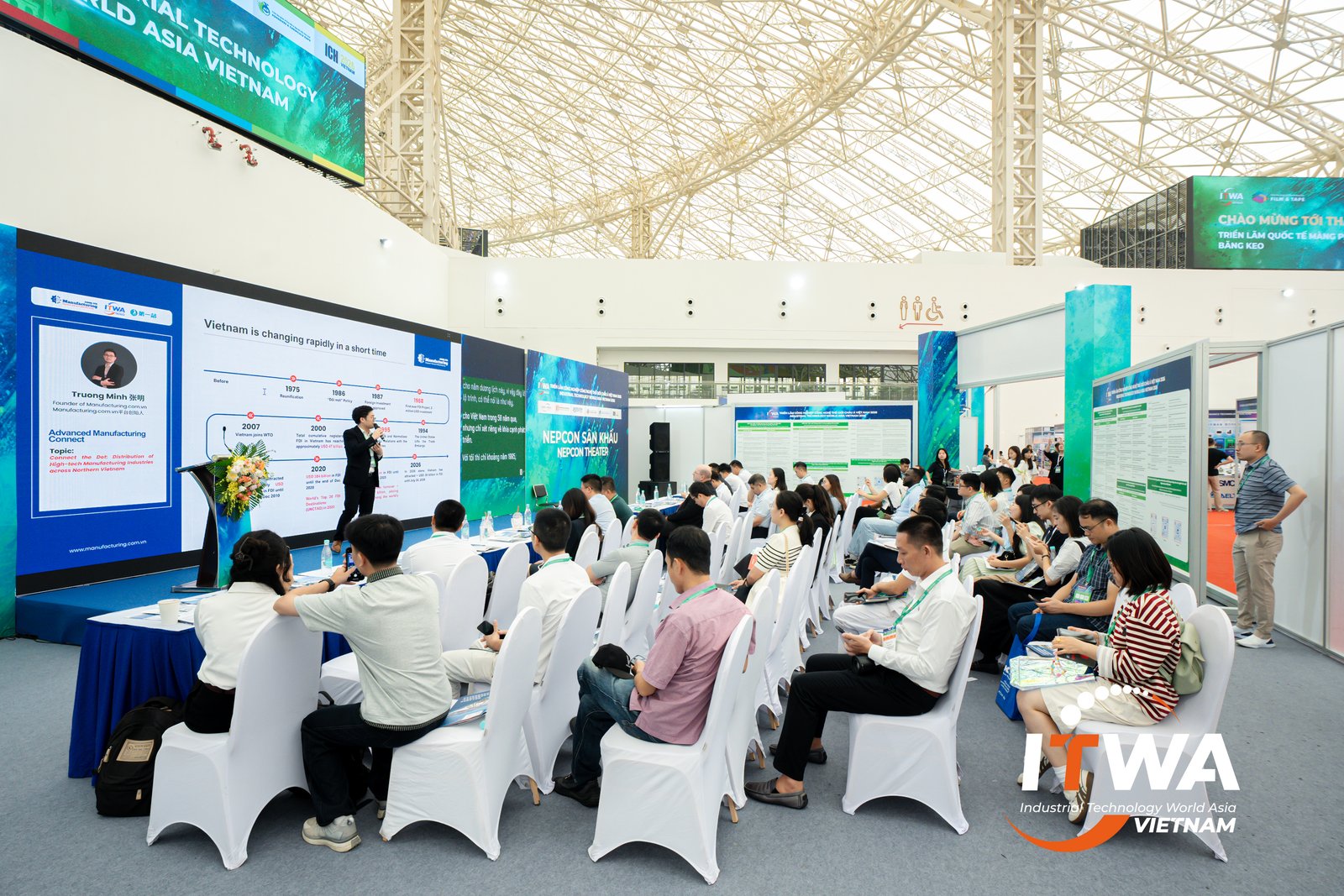
See DetailsA morning of sharp insights and real connections at NEPCON Theater, VEC Hanoi. Industrial zone developers, investment specialists, and technology leaders shared on-the-ground perspectives on Northern Vietnam's high-tech manufacturing landscape.
Monday, 10 Aug, 2026
EuroCham’s Q1 2026 Business Confidence Index shows Vietnam remains a strategic investment destination for European companies. The index fell to 72.7, but 93% of respondents still recommend Vietnam, supported by resilient revenue performance, domestic market strength, and continued long-term growth confidence.
Thursday, 16 Apr, 2026
March 2026 brought a wide range of important tax-related updates across tax administration, corporate income tax, personal income tax, value-added tax, fees and charges, e-invoicing, household business taxation, import-export tax, customs procedures, special consumption tax, environmental protection tax, and accounting.
Monday, 06 Apr, 2026
Last Friday evening, we welcomed a full-capacity room of professionals from across Vietnam’s industrial and manufacturing ecosystem.
Saturday, 21 Mar, 2026
Green buildings are entering a new phase. International standards are shifting away from a narrow focus on energy savings and moving toward a bigger question: How much carbon a building creates across its entire life?.
Monday, 16 Mar, 2026
Organized by Cross Connect Club, in collaboration with the Vietnam Industrial Zone Community, and supported by leading international business associations, the Vietnam Industrial Tour | TECHFEST + Nam Dinh Vu IP has successfully wrapped up—leaving behind lasting connections, industry insights, and strong momentum for future collaboration.
Saturday, 11 Oct, 2025